

How Hard Could it Be?
How Binge Culture Produces Tryhards

It’s Easter Break here. Kids are home, and house projects are getting done. Here’s a thousand words on taking things slow and steady and not thinking too highly of ourselves at whatever stage of life we are in.
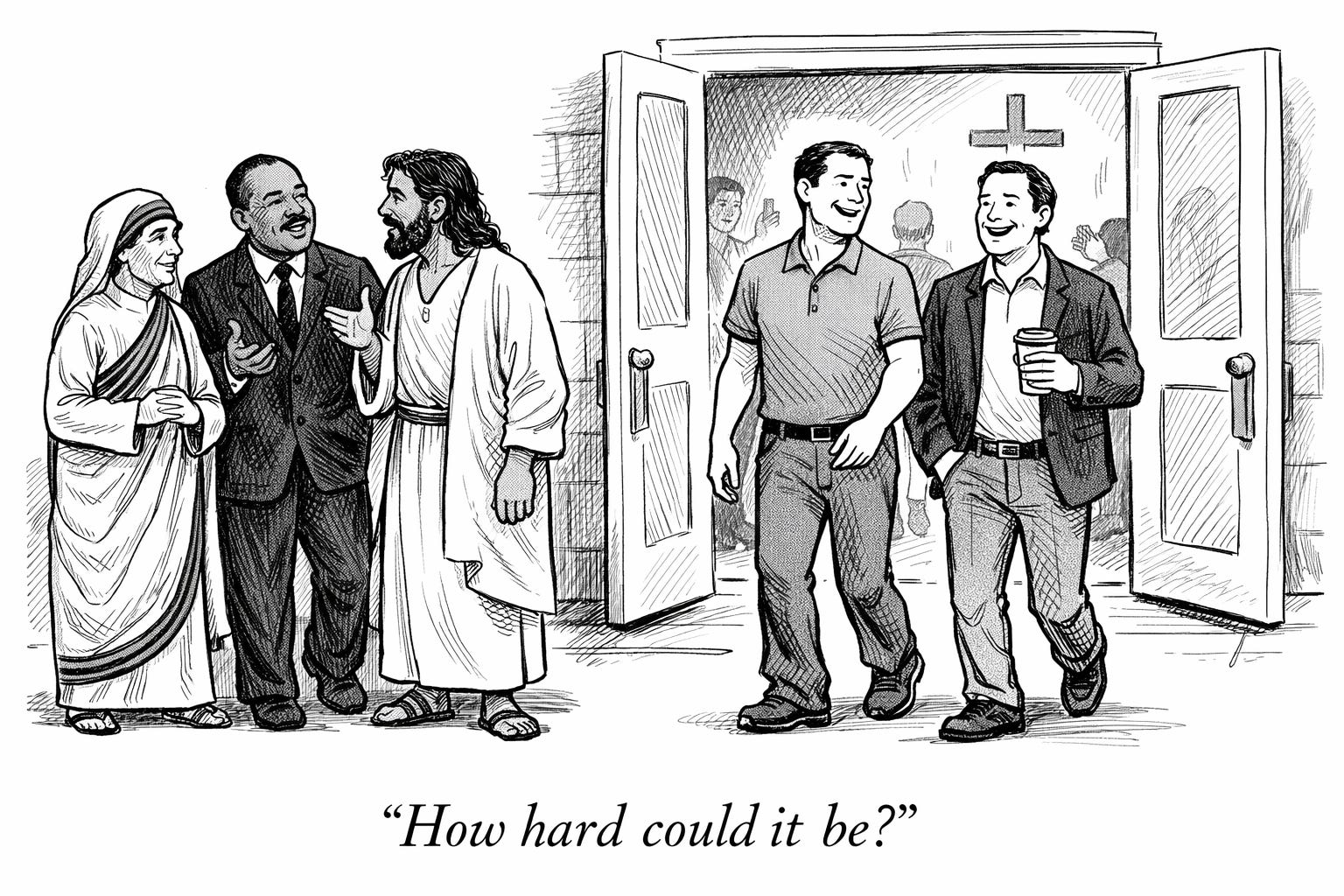
How Hard Could it Be?
How Binge Culture Produces Tryhards
by Daniel L. Bacon
Do or do not, there is no try.
-Master Yoda-
In The Empire Strikes Back, protagonist Luke Skywalker is told by force-ghost Obi-Wan Kenobi to find Master Yoda on the swamp planet Dagobah. Luke is an untrained Padawan learner in need of a Jedi Master to train him, and after landing on the planet, it doesn’t take much time to find the hermit dwelling, Jim Hensen muppet Yoda.
Yoda is older and more cryptic than Luke’s old Master. He speaks in backward rhymes like English isn’t his first language, or perhaps that speaking aloud doesn’t come naturally to his species. He is a reluctant tutor, having taught at the height of the Jedi Order when Padawans were selected, and taught in seclusion from 4 years old until they graduated to Jedi Knight and, with maturity and age, to Jedi Master.
Luke, by contrast, is a young adult and has had only a couple of days of training from Master Kenobi before his sacrifice to help Luke escape from Darth Vader, the Sith Lord and unknowing errant father of our hero.
Luke’s training in using the force for telekinesis is where our quote originates. His task is to make his ship rise from its resting place by influencing the force to do his bidding—it is a large ship, and having failed repeatedly, he complains that it is too hard and, being rebuffed by his mentor replies, “I’ll try,” at which Master Yoda responds, “do or do not, there is no try.”
I had an interesting epiphany along these lines Tuesday morning over breakfast with my eldest.
A: Dad, do you ever notice that you switch off when you’re eating your breakfast and then switch back on to find it’s gone?
Me: Yeah, actually, it happens all the time with lots of things—even driving.
A: Driving!?
Me: Sure, people talk all the time about having switched off while they’re driving and just arrive where they are going without remembering driving.
A: Isn’t that dangerous?
Me: Well, not really. Your perception is still working, and everything that has become habit is automatic, like turn signals. In fact, it can be more dangerous to intentionally drive than it is to switch off. Overthinking can interfere with practiced skill.
A: Why is that?
Me: Think about a new driver and how nervous they are on the road. They intentionally drive slower than the speed limit. Even a reasonably seasoned driver who intentionally drives fast to get to where they’re going is more likely to cause an accident than a commuter who has driven this road a hundred times and is well practised in using it to the point where their mind goes other places while their body takes them to work.
These are the doers whom Yoda speaks about—they do, and if they do poorly, then they do until the quality of their work is masterful. No one is getting in the backseat of the car of someone who is going to give driving a try—you might not get home. In fact, there is a name for people with this overconfident, how hard can it be mentality: a Tryhard.
Dictionary.com defines a Tryhard as: an underskilled or untalented participant attempting to compensate with sheer effort in order to succeed.
By contrast, we’ve all seen people so skilled at what they are doing that there is an unconscious state about them when they are in the flow of their craft. We can tell when what we are witnessing is the culmination of some previous repeated thought and intention that has long since been put away—an underlying process that is still taking place, but in the background, as they carry on a full conversation while conducting a complex task that would demand our full attention.
So then, contrary to popular opinion, trying harder is more likely to cause a mess than it is to achieve our end goal. Slowing down, doing less over a longer period of time, increases the overall quality of what is done. A long day of cleaning the house doesn’t get it as clean as cleaning the house over a week for a similar amount of time. Cooking a little bit every day makes you a better cook than batch cooking for the week. Driving a little bit every day makes you a better driver than long-haul trips.
For our purposes, writing a little bit every day makes you a better writer—singing a little bit every day makes you a better singer—loving a little bit every day makes you a better lover. Binge culture would have us believing that after watching 12 hours of back-to-back Great British Bake Off, we know better than Paul Hollywood.
It happens in academic culture as well. It’s a special kind of sophomoric tryhard that reads a book or ten books on a subject and imagines themselves an authority on the topic when what they are is conversant. Now, it’s okay to be conversant—it shows that we have given the topic at least some of the due diligence it deserves before opening our fat mouths. However, if we want to move from conversant to authoritative, we must be willing to think systematically about that topic—to read around it, to regularly hold conversations with peers and actual authorities of various aspects of the topic.
I’ve met people who don’t want to talk or hear about divergent understandings of this or that doctrine, and I can’t wrap my mind around why, when we have supposedly settled into a belief, that we wouldn’t step through the wardrobe into an imaginary land where what we don’t believe is true and the consequences thereof are laid out before us. It is maybe that we are not so sold on what we believe, but it’s all we have, and our safety, legitimacy and provision are dependent on us blocking our ears and singing loudly to drown out the authorities pleading with us to become conversant and to join in with them, taking up our place, after due diligence, as authorities ourselves.
But this entails moving beyond binge culture—beyond thinking, how hard could the Christian life really be? For many of us, it entails moving beyond the Sunday School answers that have been enough for too long. Reading the scriptures every day, studying them with authorities through books and classes, attuning ourselves to the Spirit of God in the world, in our neighbours, and in us.