
Wilding
<500 Words About Deconstruction as a Return to Nature

Good Monday morning, dear reader! These brief ruminations are proving manageable for Summer reading, and so we’ll continue. Last week was a little heavier discussing the nature of Christian Expansionism, so this week we will look at the exact opposite and consider a documentary about rewilding in relation to Christian deconstruction.
Wilding
<500 Words About Deconstruction as a Return to Nature
by Daniel L. Bacon
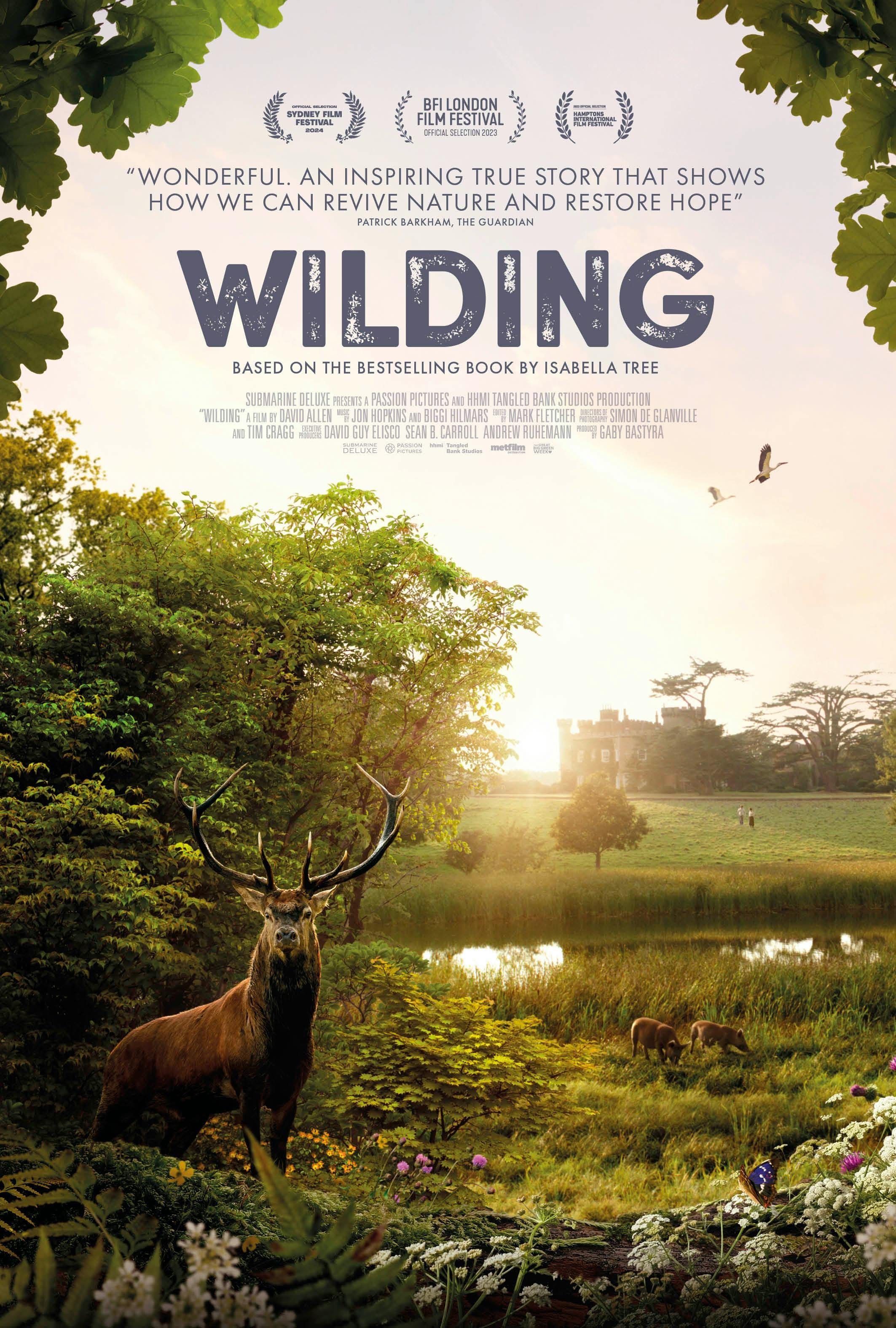
THIS EVENING I WATCHED A DOCUMENTARY called Wilding (2024), which told of the journey of a young couple in the early 2000’s who inherited Knapp Castle, their family’s estate in England. Built in 1812, Knapp Castle sits on 5 square miles of farmland in Southeast England which their family farmed from the moment their castle was built until they didn’t; two centuries of farming, brought to an end when the fences between their fields were removed and heritage cattle, pigs, and horses were released to roam free in the vast expanse of their land to rewild the area, revitalise the land, increase biodiversity and bring the wilderness back to their corner of England—to no one’s excitement except the professionals they brought along to lead their land back to health.
Let me be clear—they had to ask the government’s permission to do this—this wasn’t some biodiversity black-ops mission to rewild land they didn’t own with illegal species of flora and fauna. In fact, they didn’t even start with animals. They brought in a man to examine their ancient oak trees and advise them on their health. Unsurprisingly, they were very sick, and the solution was to introduce large grazing animals onto the estate— to rewild them to begin establishing natural migration, grazing, and mating patterns, which will naturally turn up the soil, encourage microbial and entomological life, which in turn encourages birds to nest in the area. In short, the co-existence of wild creatures with wild plants will increase the health of the land.
As mentioned, their neighbours who had been farming all that time alongside the Knapp estate were not impressed. Two centuries of farming practices were being thrown out the window—ragweed, a dangerous plant that kills horses and livestock, was let grow wild, and creeping thistle, too, was running rampant—but biological crises after crises that came against the project were met by biology itself. In 2009, when the creeping thistle was at its worst, a whole flock of butterflies migrated across the channel from Africa and devoured just these plants, averting the looming crisis with the government and their neighbours.
Watching this documentary, I was struck by how similar their experiment with the land is to deconstruction. Christianity has two millennia of ‘farming practices’, which those of us who are deconstructing have, largely, thrown to the wind. We are rewilding ourselves first, and after time, our environment begins to grow in faith diversity. Our children grow up wild, not knowing the domesticated religion that happens in the four walls of the institution, and our neighbours and family members are furious with us. Our domesticated friends wonder about the nature and quality of our faith, even as we live in wonder about the full expression of love, joy and peace we have come to know, having been released into the wilderness to become wild, free and truly alive in Christ.
Summer Ruminations:
Week 1:
The Crusader’s Dilemma

This might ruffle some feathers if anyone cares anything about what I write—which is doubtful, so it may be quiet. It’s a short one today. Summer offerings may look like this, this year: thoughts, ru…
I really like this analogy. I haven't seen the show, but my parents just visited, have seen it, and were telling us about it. I feel like I still live in the four walls but am really happy spending most of my waking hours in the wild with all of you.
This feels very true to my experience. Thank you for sharing. I want to watch this documentary now.